WHAT'S NEW?
Loading...
Showing posts with label Telecomunication. Show all posts

There are so many ways to avoid unwanted calls, in different handsets. Some manufacturers are providing inbuilt functions for it like Samsung.
Here I'm showing how to block or avoid unwanted calls for different company handsets, choose best matching for you. 
Some ways are.....

For Nokia Symbian phones
(nokia N series, 5230,5233,3250, E series and many more phones are known as symbian which have symbian operating system within it)
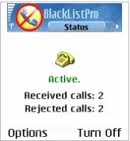
  • Blacklist Pro: For nokia symbian users there is an application named "black list pro" download it and block unwanted calls after adding unwanted caller numbers.
  • Fully customized and its very easy to use.
  • Black baller lite : For Nokia s60 v5 users. (nokia 5230,5233,5800,N-8)
  • Its application with more accuracy and functionality for advanced users.
  • Easy to understand because of Graphic interface.


For Samsung phones:
  • Samsung has inbuilt functionality to restrict calls
  • By changing "call restriction" settings in your samsung phone you will able to block all calls or any particular caller, follow the following steps.


What is IPv6 ?

  • IPv6 stands for Internet Protocol version 6. It is the second version of the Internet Protocol to be used generally across the virtual world. The first version was IPv4. IPv5 was a protocol of a different sort, intended to support video and audio rather than all-purpose addressing. IPv6 is also known as IPng, which stands for IP Next Generation.

  •  One of the main upgrades in IPv6 is in the number of addresses available for networked devices. For example, each mobile phone or other kind of electronic device can have its own IPv6 address. IPv6 allows 3.4x10^38 addresses. This is mainly due to the number of bits in each protocol. IPv4 addresses have 32 bits in them and so allow a maximum of four billion addresses. IPv6 addresses have 128 bits. 


Traditional connections for voice communications require a physical path connecting the users at the two ends of the line, and that path stays open until the conversation ends. This method of connecting a transmitter and receiver by giving them exclusive access to a direct connection is called circuit switching.
Most modern networking technology is radically different from this traditional model because it uses packet data. Packet data is information which is:
  1. chopped into pieces (packets),
  2. given a destination address,
  3. mixed with other data from other sources,
  4. transmitted over a line with all the other data,
  5. reconstituted at the other end.
Packet-switched networks chop the telephone conversation into discrete "packets" of data like pieces in a jigsaw puzzle, and those pieces are reassembled to recreate the original conversation. Packet data was originally developed as the technology behind the Internet.

A data packet
A data packet.

The major part of a packet's contents is reserved for the data to be transmitted. This part is called the payload. In general, the data to be transmitted is arbitrarily chopped-up into payloads of the same size. At the start of the packet is a smaller area called a header. The header is vital because the header contains the address of the packet's intended recipient. This means that packets from many different phone users can be mixed into the same transmission channel, and correctly sorted at the other end. There is no longer a need for a constant, exclusive, direct channel between the sender and the receiver.
Packet data is added to the channel only when there is something to send, and the user is only charged for the amount of data sent. For example, when reading a small article, the user will only pay for what's been sent or received. However, both the sender and the receiver get the impression of a communications channel which is "always on".
On the downside, packets can only be added to the channel where there is an empty slot in the channel, leading to the fact that a guaranteed speed cannot be given. The resultant delays pose a problem for voice transmission over packet networks, and is the reason why internet pages can be slow to load.
When people use walkie-talkie radios to communicate, only one person can talk at a time (the person doing the talking has to press a button). This is because walkie-talkie radios only use one communication frequency - a form of communication known as simplex:


Simplex
Simplex: Using a walkie-talkie you have to push a button to talk one-way.

Of course, this is not how mobile phones work. Mobile phones allow simultaneous two-way transfer of data - a situation known as duplex (if more than two data streams can be transmitted, it is called multiplex):


Duplex
Duplex: Allows simultaneous two-way data transfers.

The communication channel from the base station to the mobile device is called the downlink, and the communication from the mobile device back to the base station is called the uplink. How can duplex communication be achieved? Well, there are two possible methods which we will now consider: TDD and FDD.